Learning Kit
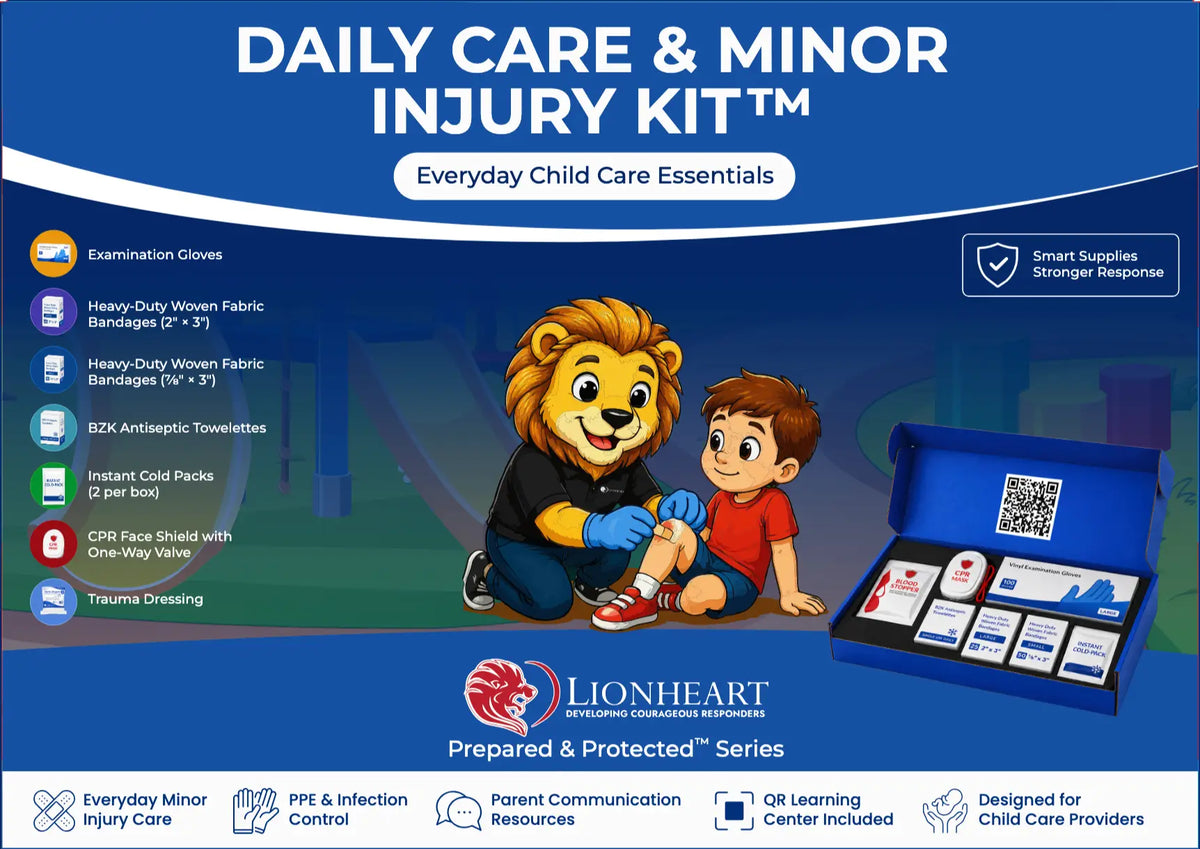
Daily care and minor injury
This learning kit is designed as a quick-reference educational guide for childcare providers, teachers, staff members, and caregivers.
Each module focuses on a specific topic and can be completed independently. The goal is to provide practical information that supports everyday care while reinforcing safety, confidence, and preparedness.
By the end of this guide, you'll have a better understanding of common situations encountered in child care environments and know where to find additional resources when needed.
Learning Modules
Every Day Matters
The Lionheart Philosophy of Everyday Care
"Preparedness isn't about expecting emergencies. It's about creating calm, confident responses to everyday moments."
Why This Matters
Minor bumps, scrapes, and bruises are a normal part of childhood.
What children remember most isn't the Band-Aid—it is how the adults around them responded.
- A calm teacher helps children feel safe.
- An organized classroom allows staff to respond confidently.
- Thoughtful communication builds trust with families.
The Daily Care & Minor Injury Kit™ was created to support those everyday moments by keeping frequently used supplies organized.
This guide is intended to complement your existing policies and training—not replace them.
The Lionheart Philosophy
Preparedness is more than having supplies. It is creating systems that allow children, families, and staff to feel confident every day.
Prepared classrooms are organized.
Prepared teachers communicate calmly.
Prepared programs continue learning and improving.
Every interaction is an opportunity to build trust.
Everyday Preparedness
Being prepared doesn't require extraordinary actions. It means developing consistent habits.
Examples include:
- Small habits practiced consistently often make the biggest difference.
- Knowing where supplies are stored.
- Keeping the kit organized.
- Responding calmly.
- Communicating professionally.
- Restocking supplies before they run out.
⭐ Best Practice
Store the Daily Care & Minor Injury Kit™ in the same location in every classroom. Consistency helps substitute teachers, float staff, and new employees quickly locate supplies when they are needed.
📘 Licensing Perspective
Many child care programs establish internal procedures for responding to minor injuries, documenting incidents, and communicating with families. This guide is designed to support those everyday practices and should be used alongside your organization's policies and applicable licensing requirements.

Courage's Corner
"Children may forget the scrape on their knee. They will remember the adult who helped them feel safe."
— Courage™
💬 Reflect & Discuss
- What are the most common minor injuries in your classroom?
- How do children typically respond when they become injured?
- What helps children feel calm and supported after an everyday accident?
✅ Try It Today
Before children arrive tomorrow:
- Verify your Daily Care & Minor Injury Kit™ is fully stocked.
- Show another staff member where the kit is stored.
- Think of one phrase you can use to reassure a child after a minor injury.
Module 1 Complete
You've completed this module. Keep these key takeaways in mind as you apply everyday preparedness in your classroom.
- Minor injuries are a normal part of childhood.
- Calm, confident adults help children feel safe.
- Organization improves response time.
- Good communication builds trust with families.
- Everyday preparedness begins long before an injury occurs.
Understanding Your Daily Care & Minor Injury Kit™
Preparedness Begins with Organization
"When every item has a place, every caregiver has confidence."
Why This Matters
When a child needs help, every second spent searching for supplies is time taken away from caring for that child.
The Lionheart Daily Care & Minor Injury Kit™ was intentionally designed around the items child care providers use most frequently—not to replace your required first aid kit, but to make everyday care faster, easier, and more organized.
A consistent setup also helps substitute teachers, float staff, and new employees quickly find what they need while maintaining supervision of the children in their care.
Preparedness begins with organization.
What's Inside Your Kit
Every item was selected because it is commonly used in child care settings and supports everyday preparedness.
Examination Gloves
Disposable gloves help reduce exposure to blood and other potentially infectious materials during appropriate care situations.
Common Uses
- Minor cuts and scrapes
- Bloody noses (following program procedures)
- Situations involving bodily fluids
A full box is included so staff never hesitate to use appropriate personal protective equipment.
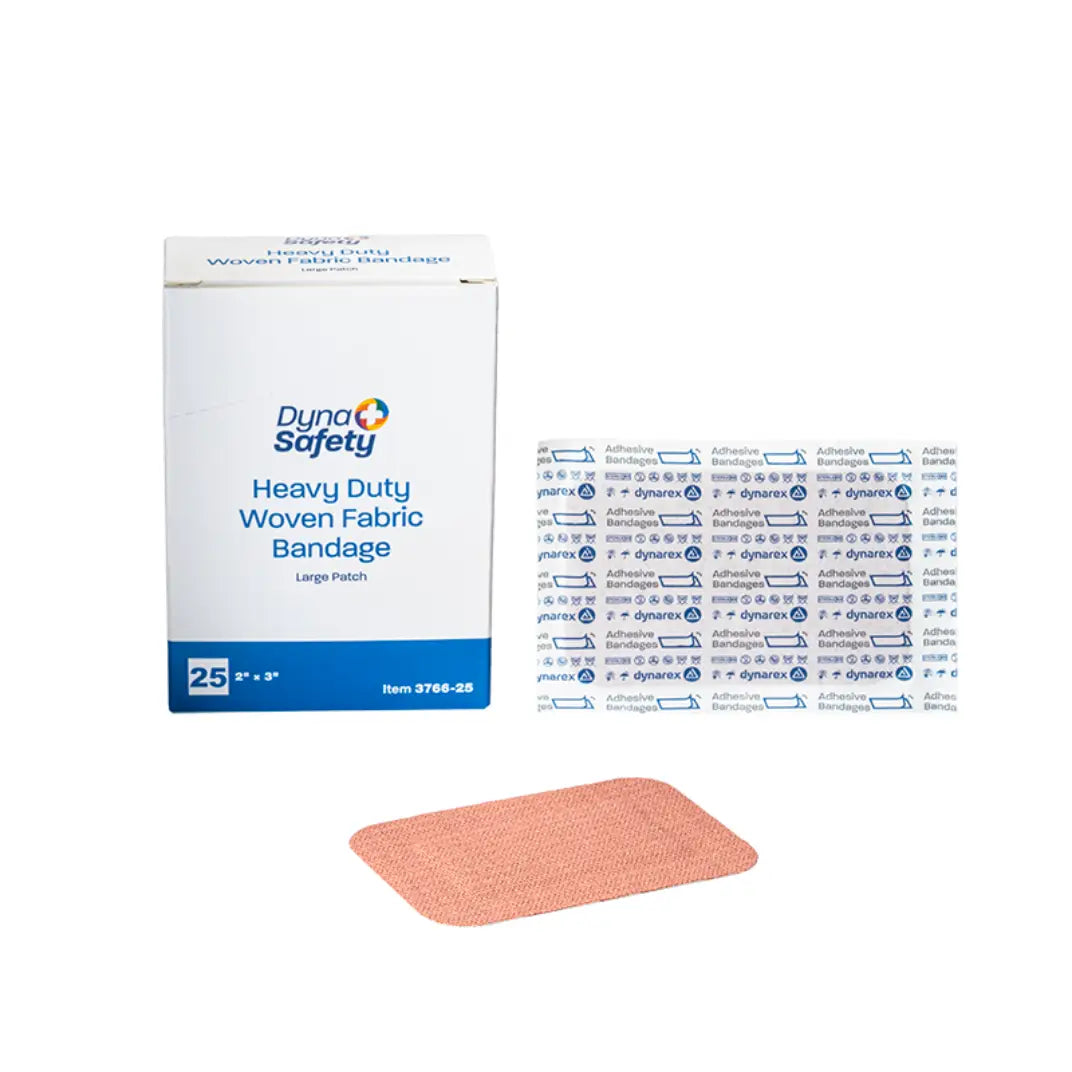
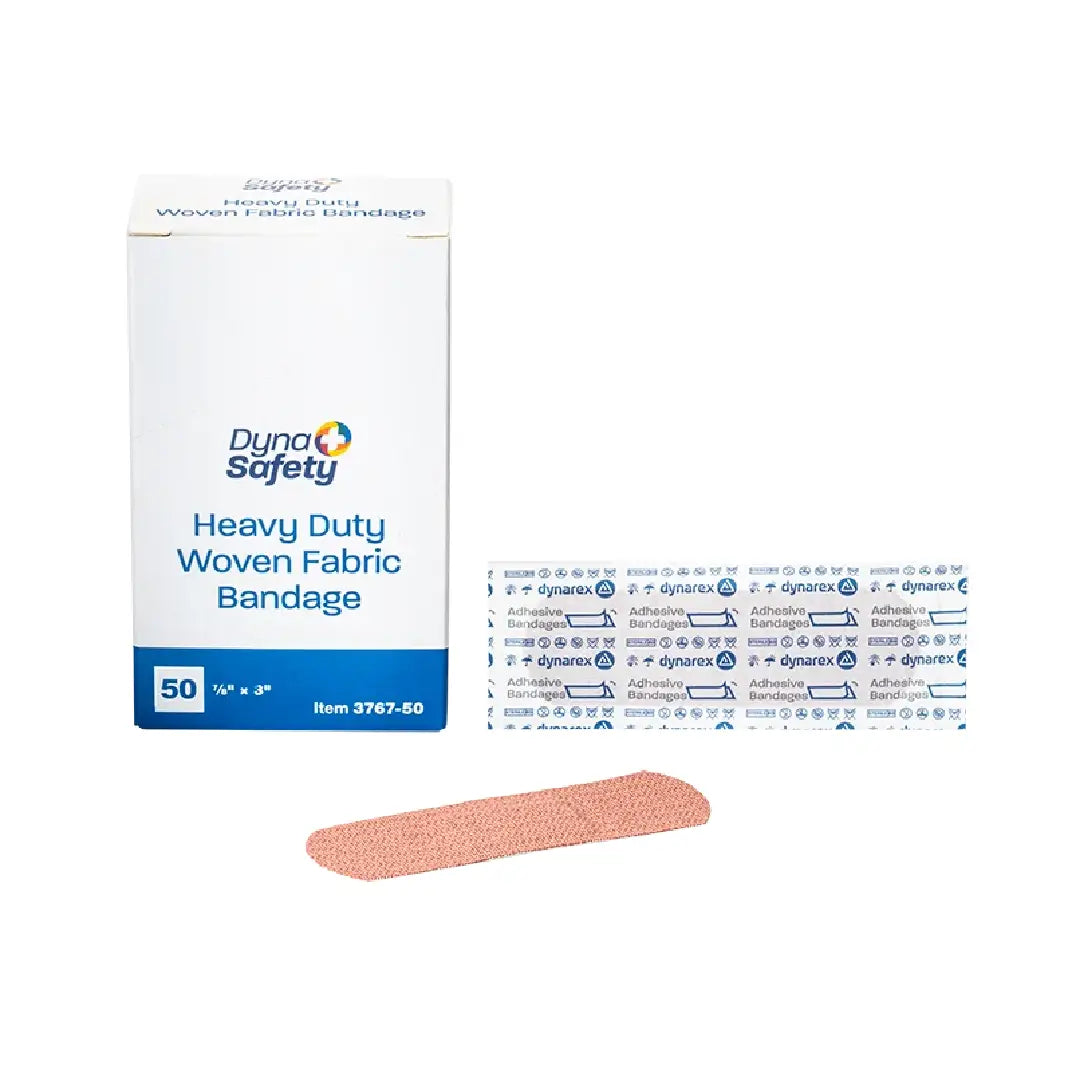
Heavy-Duty Woven Fabric Bandages
Large Bandages (2" × 3")
Designed for larger playground scrapes and abrasions.
Standard Bandages (⅞" × 3")
Ideal for fingers, small cuts, and everyday minor injuries.
These are the items most likely to need routine replacement.
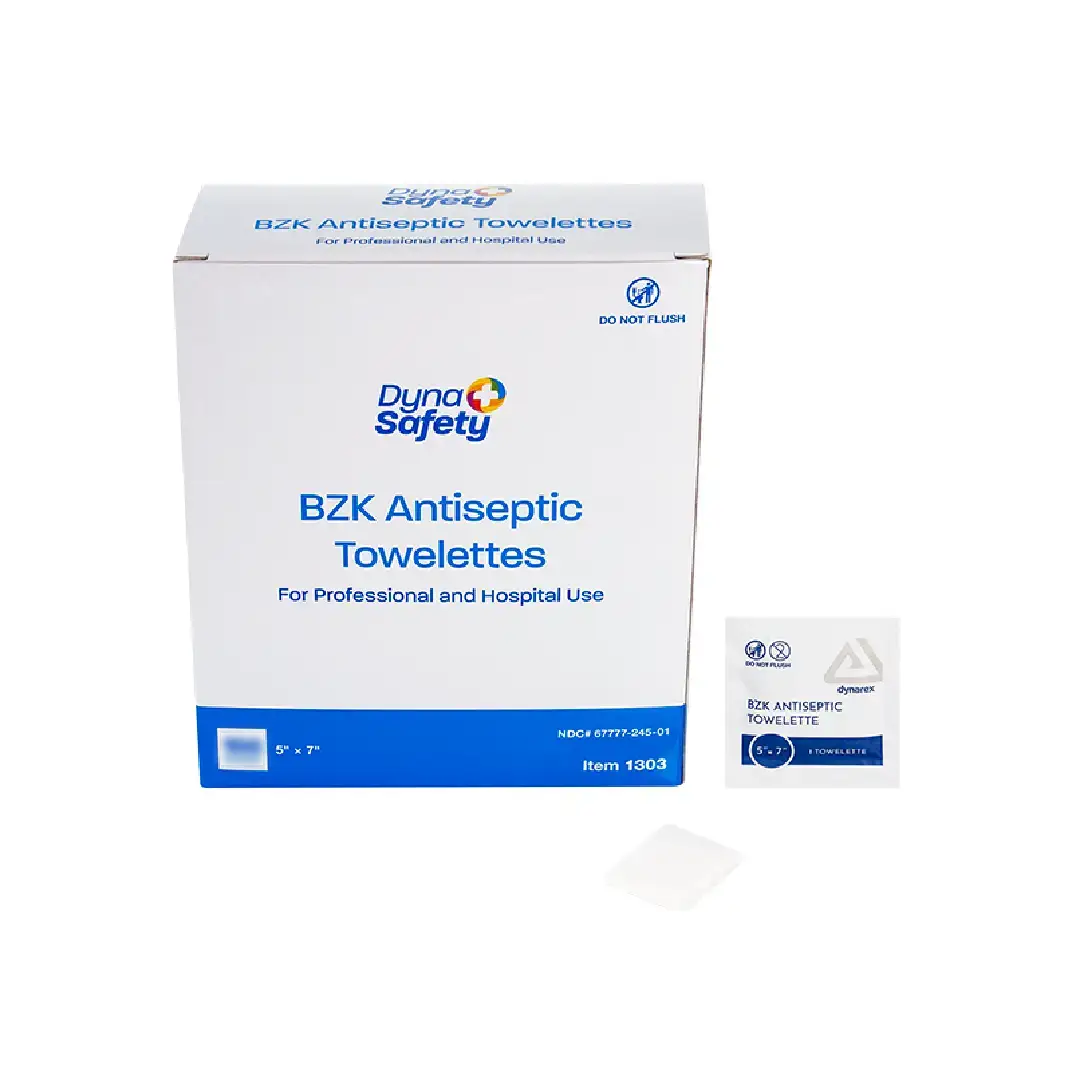
BZK Antiseptic Towelettes
Individually packaged antiseptic wipes help clean minor scrapes according to your program's procedures before applying a bandage.
Their individual packaging keeps them clean, portable, and easy to use.
Instant Cold Packs
Cold packs provide temporary comfort following everyday bumps and bruises.
Always follow your organization's procedures and supervise children while a cold pack is being used.
CPR Face Shield
This item is included to support emergency preparedness.
It is intended for use only by appropriately trained personnel in accordance with your organization's policies and procedures.
Trauma Dressing
Although rarely needed, this dressing provides an additional level of preparedness for unexpected situations until your program's emergency procedures are activated.
The Lionheart Organization System™
Every item has a designated location inside the molded insert.
This provides several important benefits:
- Faster access to supplies
- Easier monthly inventory checks
- Consistent organization across classrooms
- Simple onboarding for new staff
- Immediate identification of missing items
If a space is empty, it's time to restock.
Keeping Your Kit Ready
Develop a simple routine for maintaining your kit.
After an item is used:
- Replace it as soon as practical.
- Return remaining supplies to their designated locations.
- Check that packaging remains clean and undamaged.
- Report items that need reordering according to your program's procedures.
⭐ Best Practice
Perform a quick visual inspection of your kit each week. A one-minute check can prevent delays when supplies are needed most.
📘 Licensing Perspective
Many child care programs maintain organized classroom supplies to support everyday health and safety practices. A well-organized Daily Care Kit™ can complement your existing first aid supplies and help reinforce consistent classroom routines.
Always follow your organization's policies and applicable licensing requirements regarding required equipment and documentation.
Courage's Corner
"When we know where our supplies are, we can spend less time searching and more time caring."
— Courage™
💬 Reflect & Discuss
- Could every staff member in your classroom locate this kit within a few seconds?
- Which supplies do you think your classroom uses most often?
- How could a consistent organization system help substitute teachers or new employees?
✅ Try It Today
Before your next shift:
- Open your Daily Care & Minor Injury Kit™ and identify each item.
- Verify that every item is in its designated location.
- Decide who will be responsible for checking and restocking the kit each month.
Module 2 Complete
You've completed this module. Keep these key takeaways in mind as you continue building organized, confident classroom routines.
- The kit is designed to support everyday care—not replace your required first aid supplies.
- Every item has a specific purpose and designated location.
- Organization improves response time and confidence.
- Regular inspections help keep the kit ready for everyday use.
- Small habits today help create a more prepared classroom tomorrow.
The Lionheart Response Model™
A Calm, Consistent Approach to Everyday Minor Injuries
"Children borrow our calm before they find their own."
Why This Matters
Children don't expect adults to prevent every bump or scrape.
They expect adults to help.
The way we respond during the first few moments after an injury often determines how the child feels, how other children react, and how families perceive the quality of care.
The Lionheart Response Model™ is a simple framework designed to help child care professionals respond consistently, compassionately, and confidently to everyday minor injuries.
While every situation is unique, a calm and organized response helps create a safe, supportive environment for everyone.
The Lionheart Response Model™
The Lionheart Response Model™ consists of six simple steps that can be applied to many everyday situations.
Stay Calm
Children naturally look to adults for reassurance. Your voice, facial expression, and body language all communicate safety.
Remember:
- Take a breath.
- Walk—don't rush.
- Speak slowly.
Your calm presence helps children begin to regulate their own emotions.
Ensure Safety
Before focusing on the injury, quickly assess the environment.
Ask yourself:
- Is the area safe?
- Do other children need to be redirected?
- Can supervision of the group be maintained?
- Does another staff member need to assist?
Protecting the entire group remains a priority.
Comfort the Child
Move to the child's eye level whenever possible.
Use a calm, reassuring voice.
Simple phrases such as:
- "I'm here to help."
- "Let's take a look together."
- "You're safe."
Allow the child time to express how they feel.
Provide Everyday Care
Using your program's procedures:
- Put on gloves when appropriate.
- Clean the area if indicated.
- Apply a bandage or cold pack when appropriate.
- Continue observing the child's comfort and participation.
This kit is designed to support these everyday situations—not replace emergency care or your required first aid supplies.
Observe
Before returning the child to normal activities, take a moment to observe.
Ask yourself:
- Does the child appear comfortable?
- Are they able to participate normally?
- Has the child calmed emotionally?
- Does the situation require additional notification?
Observation is just as important as treatment.
Communicate
Every incident deserves appropriate communication.
Depending on your organization's procedures, this may include:
- Informing another staff member or supervisor.
- Documenting the incident.
- Communicating with the child's family.
- Following additional procedures when needed.
Clear communication builds trust and supports continuity of care.
The Lionheart Difference
The Daily Care & Minor Injury Kit™ is about more than supplies.
It's about creating a consistent experience for children.
Children remember:
- Calm adults.
- Gentle voices.
- Kind words.
- Feeling safe.
⭐ Best Practice
Whenever possible, assign one staff member to provide care while another maintains supervision of the remaining children.
Working together helps meet both the child's immediate needs and the ongoing safety needs of the group.
📘 Licensing Perspective
Child care programs often establish procedures for responding to injuries, maintaining supervision, documenting incidents, and communicating with families.
Providers should always follow their organization's policies, emergency procedures, and applicable licensing requirements.
Courage's Corner
"Being prepared isn't about having all the answers. It's about responding with calm, kindness, and confidence when someone needs you."
— Courage™
💬 Reflect & Discuss
- Which step of the Lionheart Response Model™ is the easiest for you? Which is the most challenging?
- How does your own demeanor influence a child's emotional response after an injury?
- What role does teamwork play when one child needs attention while others continue learning and playing?
✅ Try It Today
Before your next shift:
- Practice the six steps of the Lionheart Response Model™ with a coworker.
- Identify who would assist with supervising the rest of the group during an injury response.
- Think of one reassuring phrase you can use instead of saying, 'You're okay.'
Module 3 Complete
You've completed this module. Keep these key takeaways in mind as you apply calm, consistent responses during everyday care situations.
- Your calm response sets the tone for the entire situation.
- Always ensure the environment is safe before providing care.
- Comfort, observation, and communication are just as important as applying a bandage.
- The Lionheart Response Model™ provides a simple framework for everyday minor injuries.
- Consistent responses help children, families, and staff feel more confident.
Documentation & Parent Communication
Building Trust Through Professional Communication
"Families understand that children sometimes get hurt. What they remember most is how their child's caregivers responded."
Why This Matters
Children are naturally active, and minor injuries are part of growing up.
When an injury occurs, families want to know three things:
- What happened?
- How was my child cared for?
- How is my child doing now?
Clear, professional communication helps answer those questions and strengthens the partnership between families and your program.
Good documentation also helps ensure consistency among staff and supports continuity of care.
The Lionheart Communication Framework™
Every conversation with a family should be calm, factual, and respectful.
A simple five-step approach can help guide those conversations.
Explain What Happened
Briefly describe the event using only facts that you observed.
Example
"During outdoor play, Ava tripped while running and scraped her knee."
Avoid assumptions or speculation.
Explain the Care Provided
Describe what was done according to your program's procedures.
Example
"The area was cleaned, a Bandage was applied, and Ava was comforted by her teacher."
Keep your explanation simple and factual.
Describe the Child's Current Condition
Share what you are observing now.
Example
"After a few minutes, she returned to play comfortably with her classmates."
Avoid making medical conclusions or guarantees.
Explain Any Next Steps
Depending on your program's procedures, this may include:
- Continued observation
- Completion of an incident report
- Supervisor notification
- Parent signature
- Additional communication if needed
Invite Questions
End every conversation by giving families an opportunity to ask questions.
Examples:
- "Do you have any questions?"
- "Is there anything else you'd like to know?"
These simple questions help build trust and encourage open communication.
Writing Objective Documentation
Professional documentation describes what you observed—not what you assumed.
| ✔ Objective | ✘ Subjective |
|---|---|
| Child tripped while walking. | Child was careless. |
| Small scrape observed on left knee. | Serious injury. |
| Child cried for approximately one minute. | Child was hysterical. |
| Child returned to activities comfortably. | Child was completely fine. |
Objective documentation is more useful because it describes facts rather than opinions.
Parent Communication Examples
Every family conversation is an opportunity to build trust.
The examples below demonstrate clear, professional communication while following your program's procedures.
- Communicate calmly and professionally.
- Share only facts that were observed.
- Explain the care that was provided.
- Describe the child's current condition.
- Invite questions and encourage open communication.
⭐ Best Practice
Communicate with families as soon as practical and according to your program's procedures.
Timely, honest communication helps build trust and demonstrates professionalism.
📘 Licensing Perspective
Child care programs typically have established procedures for documenting incidents and communicating with families.
Documentation requirements and notification timelines may vary based on your organization's policies, licensing regulations, and the nature of the incident.
Always follow your program's established procedures.
Courage's Corner
"A Bandage may care for a scrape—but honest communication cares for a family's peace of mind."
— Courage™
💬 Reflect & Discuss
- What makes a parent feel confident after learning their child was injured?
- Why is objective documentation more valuable than opinions or assumptions?
- How can your team ensure communication is consistent across every classroom?
✅ Try It Today
Before your next shift:
- Review your program's incident documentation process.
- Practice explaining a minor injury to a coworker using the Lionheart Communication Framework™.
- Think of one reassuring phrase you can use when speaking with families.
Communication Examples
In-Person Pickup
Before you leave today, I wanted to let you know that during outdoor play, your child tripped and scraped their knee.
We cleaned the area, applied a Bandage, and continued to monitor them.
They returned to play after a few minutes and had a great rest of the day.
I wanted to make sure you were aware before heading home.
Do you have any questions?
Text Message
Hello!
We wanted to let you know that your child experienced a minor scrape during today's activities.
Our staff provided appropriate care according to program procedures, and your child is comfortable and participating in classroom activities.
We'll be happy to share more details at pickup if you have any questions.
Subject: Update Regarding Today's Minor Injury
Good afternoon,
I wanted to let you know that today your child experienced a minor injury during supervised play.
Our staff responded promptly according to our program's procedures, provided appropriate care, and continued to observe your child throughout the day.
At this time, your child is comfortable and participating in normal classroom activities.
Please let us know if you have any questions.
We appreciate the opportunity to partner with you in caring for your child.
Thank you,
Module 4 Complete
You've completed this module. Keep these communication principles in mind whenever you document incidents and speak with families.
- Honest, timely communication builds trust.
- Document observations—not assumptions.
- Explain what happened, the care provided, and the child's current condition.
- Follow your program's procedures for documentation and family notification.
- Professional communication strengthens relationships with families.
Preventing Everyday Injuries
Creating Safe Spaces for Learning and Exploration
"The safest classrooms don't stop children from exploring—they prepare the environment so children can explore with confidence."
Why This Matters
Children learn by exploring.
They climb. They run. They build. They discover.
Small bumps and scrapes are often a natural part of childhood, but many everyday injuries can be reduced through thoughtful preparation, active supervision, and organized learning environments.
Preventing injuries isn't about limiting play.
It's about creating environments where children can safely learn, grow, and take age-appropriate risks.
The Lionheart Daily Safety Scan™
Before children arrive each day, take a few minutes to walk through your classroom and outdoor play area. Look for small issues before they become bigger problems.
Daily Safety Scan™
Ask Yourself:
- ✔ Are walkways clear?
- ✔ Are toys organized and in good condition?
- ✔ Are rugs lying flat?
- ✔ Are shelves and furniture stable?
- ✔ Are playground gates secure?
- ✔ Is the Daily Care & Minor Injury Kit™ stocked and accessible?
A five-minute safety check each morning can help prevent many common classroom injuries.
Active Supervision
One of the most effective ways to prevent injuries is through active supervision.
Active supervision means more than simply watching children.
It means:
- Positioning yourself where you can see all children.
- Moving throughout the learning environment.
- Anticipating potential hazards.
- Engaging with children while maintaining awareness of the entire group.
Children are safest when adults are both present and attentive.
Risk vs. Hazard
One of the most important responsibilities of an early childhood professional is understanding the difference between a healthy challenge and an unnecessary hazard.
Risk
Healthy Risks
These experiences support learning and development.
- Climbing age-appropriate playground equipment.
- Balancing on stepping stones.
- Learning to use child-sized tools under supervision.
These activities build confidence, coordination, and resilience.
Hazards
Hazards
Hazards increase the likelihood of injury without adding developmental value.
- Broken equipment.
- Wet floors.
- Toys left in walkways.
- Damaged furniture.
- Unsecured shelving.
Our goal is to remove hazards—not eliminate healthy exploration.
Safe Classroom Habits
Simple routines can help reduce many everyday injuries.
Encourage children to:
- Walk indoors.
- Keep personal belongings in designated areas.
- Put toys away after use.
- Ask for help when needed.
- Use equipment as intended.
⭐ Best Practice
Many injuries occur during transitions, such as moving between classrooms, lining up, or preparing for outdoor play.
Slow the pace, provide clear expectations, and position staff where they can effectively supervise children during these busy moments.
📘 Licensing Perspective
Maintaining safe indoor and outdoor environments is an important part of quality child care.
Regular classroom inspections, organized learning spaces, active supervision, and prompt correction of hazards support everyday health and safety practices.
Always follow your organization's policies and applicable licensing requirements.
Courage's Corner
"The best way to care for a child after a fall is to notice the little things that help prevent the next one."
— Courage™
💬 Reflect & Discuss
- Where do most minor injuries occur in your classroom or playground?
- What simple changes could make those areas safer?
- How does active supervision differ from simply watching children?
✅ Try It Today
Before children arrive tomorrow:
- Complete a five-minute Lionheart Daily Safety Scan™.
- Identify one hazard that can be corrected today.
- Discuss active supervision with a coworker and compare your classroom routines.
Module 5 Complete
You've completed this module. Keep these key takeaways in mind as you create safer learning environments every day.
- Many everyday injuries can be reduced through preparation.
- The Lionheart Daily Safety Scan™ helps identify hazards before children arrive.
- Active supervision is one of the most effective injury prevention tools.
- Healthy risks help children grow; unnecessary hazards should be removed.
- Organized environments create safer, more confident classrooms.
Healthy Habits & Infection Prevention
Small Habits That Make a Big Difference
"Healthy classrooms are built one habit at a time."
Why This Matters
Young children learn by exploring the world around them.
They touch toys. They play together. They share materials. They learn through hands-on experiences.
Healthy classroom routines help support these important learning experiences while promoting a clean, organized environment for children, families, and staff.
Simple daily habits—like washing hands, using gloves appropriately, and keeping supplies organized—help create a culture of health and preparedness.
The Lionheart Clean Hands • Clean Care™ Principle
Prepared care begins before you open the kit. Healthy routines help protect everyone in the classroom. The Clean Hands - Clean Care™ Principle reminds us that caring for children starts with caring for the environment in which they learn. Good habits become part of your classroom culture.
Everyday Healthy Habits
Small routines performed consistently can have a lasting impact.
Consider these everyday practices:
- Wash hands according to your program's procedures.
- Encourage children to wash their hands during routine transitions.
- Wear disposable gloves when appropriate for the situation.
- Return supplies to their designated locations after use.
- Replace used items promptly.
- Keep frequently touched classroom areas clean according to your organization's cleaning procedures.
Consistency is more important than perfection.
Hand Hygiene
Hand hygiene is one of the simplest ways to support a healthy classroom.
Children also learn by watching the adults around them.
When teachers model healthy habits, children are more likely to develop those same routines.
Turn handwashing into a positive learning opportunity by using songs, visual reminders, or classroom routines that make it engaging and age appropriate.
Appropriate Glove Use
Disposable gloves are included in your Daily Care & Minor Injury Kit™ to help support appropriate personal protection during situations involving blood or other potentially infectious materials.
Remember:
- Use a new pair of gloves for each appropriate situation.
- Remove gloves carefully after use.
- Dispose of gloves according to your program's procedures.
- Wash your hands after removing gloves.
Gloves are an important tool—but they do not replace proper hand hygiene.
Keep Your Kit Clean & Ready
A well-organized kit supports a professional response.
During your routine inventory checks:
- Replace used supplies.
- Check product packaging for damage.
- Keep the molded insert clean.
- Return every item to its designated location.
⭐ Best Practice
Choose one day each month to inspect your Daily Care & Minor Injury Kit™.
A quick monthly check helps ensure supplies remain organized, stocked, and ready when needed.
📘 Licensing Perspective
Many child care programs establish written procedures related to hand hygiene, cleaning, and the use of personal protective equipment.
These everyday routines help support healthy learning environments.
Always follow your organization's health policies, cleaning procedures, and applicable licensing requirements.
Courage's Corner
"The healthiest classrooms aren't built by chance—they're built through everyday habits that show children we care."
— Courage™
💬 Reflect & Discuss
- What healthy routines are already part of your classroom day?
- How do you help children develop good hand hygiene habits?
- What simple changes could make your Daily Care & Minor Injury Kit™ easier to maintain?
✅ Try It Today
Before your next shift:
- Inspect your Daily Care & Minor Injury Kit™ and return every item to its designated place.
- Review your classroom's hand hygiene routine with your team.
- Identify one healthy habit you can model consistently for children today.
Module 6 Complete
You've completed this module. Keep these healthy habits in mind as you create a cleaner, safer, and more prepared classroom every day.
- Healthy habits help create healthier classrooms.
- Hand hygiene and appropriate glove use are everyday practices that support quality care.
- Children learn by watching the adults around them.
- Organized supplies contribute to confident, efficient responses.
- Consistent routines build a culture of preparedness and wellness.
Caring for the Whole Child
Compassion Is One of Your Most Valuable Tools
"Children may forget the scrape, but they will remember how you made them feel."
Why This Matters
Every bump or scrape is more than a physical event.
For a young child, it can also be an emotional experience.
A small injury may feel frightening—not because it is serious, but because it was unexpected.
Children often look to trusted adults to decide how they should feel.
When adults respond with calm, patience, and empathy, children begin to feel safe again.
Everyday care isn't just about treating an injury.
It's about caring for the whole child.
Supporting Children's Emotional Well-Being
Your Calm Becomes Their Calm
Children naturally take emotional cues from the adults around them.
If we appear rushed, anxious, or alarmed, children often become more upset.
If we remain calm, reassuring, and confident, children are more likely to settle and regain their sense of security.
Simple actions can make a big difference:
- Kneel to the child's eye level.
- Speak with a calm, gentle voice.
- Listen before responding.
- Allow the child time to express their feelings.
- Offer reassurance without minimizing the experience.
Your calm presence is often the first step in helping a child recover.
The Courage Conversation™
Instead of immediately saying:
"You're okay."
Try using language that acknowledges the child's experience.
Examples include:
- "I'm here to help."
- "Can you show me where it hurts?"
- "That must have surprised you."
- "Let's take a look together."
These simple phrases help children feel heard, respected, and supported.
Helping Children Build Resilience
Resilience isn't about never crying.
It's about learning that difficult moments can be managed with support.
After appropriate care has been provided and the child feels ready, encourage them to return to play at their own pace.
Celebrate their confidence—not the fact that they stopped crying.
Examples include:
- "You were very brave to tell me what happened."
- "Thank you for letting me help."
- "When you're ready, we'll go back together."
Resilience grows one positive experience at a time.
The Courage Conversation™
Instead of immediately saying:
"You're okay."
Try using language that acknowledges the child's experience.
Examples include:
- I'm here to help.
- Can you show me where it hurts?
- That must have surprised you.
- Let's take a look together.
⭐ Best Practice
Whenever possible, speak with children at eye level during everyday care.
Eye-level communication feels less intimidating and helps children feel respected, safe, and connected.
📘 Licensing Perspective
Many early childhood programs emphasize responsive relationships, social-emotional development, and positive interactions as part of high-quality care.
Calm, respectful communication and emotionally supportive responses complement your program's existing practices and help create a nurturing learning environment.
Courage's Corner
"Sometimes the greatest first aid isn't found inside a box—it's found in your voice, your patience, and your kindness."
— Courage™
💬 Reflect & Discuss
- How do children in your classroom typically react after a minor injury?
- What phrases help children feel supported without minimizing their emotions?
- How can you encourage empathy among classmates while maintaining supervision and privacy?
✅ Try It Today
Before your next shift:
- Practice kneeling to a child's eye level during conversations.
- Replace one phrase like 'You're okay' with 'I'm here to help.'
- Notice how your own tone and body language influence children's emotional responses.
Module 7 Complete
You've completed this module. Keep these reminders in mind as you support children's emotional well-being alongside their physical care.
- Children often need emotional reassurance as much as physical care.
- Calm adults help children feel safe and supported.
- Listening is one of the most valuable tools you have.
- Everyday interactions build resilience and trust.
- Compassion is an essential part of quality child care.
Building a Culture of Preparedness
Preparedness Is a Daily Habit, Not a One-Time Event
"Great classrooms don't become prepared by accident. They become prepared through consistent habits practiced every day."
Why This Matters
Preparedness is more than having the right supplies.
It's creating a culture where everyone understands their role, follows consistent routines, and works together to provide safe, high-quality care.
- Strong systems create confident teachers.
- Confident teachers create calm classrooms.
- Calm classrooms help children thrive.
Preparedness isn't something we do only when an injury happens. It's part of everything we do throughout the day.
The Lionheart Preparedness Cycle™
Preparedness is not a checklist you complete once. It's an ongoing cycle that keeps your classroom ready every day.
1. Prepare
Before children arrive:
- Organize your classroom.
- Check supplies.
- Review responsibilities.
- Remove hazards.
Preparation builds confidence.
2. Prevent
Look for opportunities to reduce unnecessary risks.
Examples include:
- Clearing walkways.
- Replacing damaged materials.
- Maintaining active supervision.
- Keeping supplies fully stocked.
Small actions today help prevent problems tomorrow.
3. Respond
When an everyday injury occurs:
- Stay calm.
- Follow the Lionheart Response Model™.
- Support the child.
- Continue supervising the group.
Prepared responses create confidence.
4. Communicate
Keep communication clear and respectful.
Communicate with:
- Coworkers
- Supervisors
- Families
Follow your organization's procedures for documentation and parent communication.
5. Restore
After the situation has been resolved:
- Restock used supplies.
- Return items to the molded insert.
- Reorganize the work area.
- Prepare for the next child who may need assistance.
Preparedness begins again.
One Classroom, One Standard
Children benefit when every classroom follows similar routines.
Consistency helps:
- Children know what to expect.
- Families receive consistent communication.
- New staff become confident more quickly.
- Substitute teachers locate supplies easily.
- Directors maintain quality across the program.
⭐ Best Practice
During staff meetings, spend five minutes discussing one everyday safety topic each month. Simple conversations about organization, supervision, communication, or classroom routines help reinforce a culture of preparedness without requiring lengthy training sessions.
📘 Licensing Perspective
High-quality child care programs often rely on consistent policies, organized environments, teamwork, and ongoing staff communication to support children's health and safety.
Regular review of classroom routines and preparedness practices can complement your program's existing procedures and quality improvement efforts.
Courage's Corner
"Preparedness isn't one person doing everything. It's everyone doing the little things that help children feel safe."
— Courage™
💬 Reflect & Discuss
- What routines help your classroom run smoothly each day?
- If a substitute teacher entered your classroom today, could they quickly find the Daily Care & Minor Injury Kit™?
- What's one small improvement your team could make this week to strengthen preparedness?
✅ Try It Today
Before your next shift:
- Walk through your classroom with a coworker and identify one opportunity to improve organization.
- Confirm everyone knows where the Daily Care & Minor Injury Kit™ is located.
- Discuss who would take each role if a child needed assistance during outdoor play.
Module 8 Complete
You've completed this module. Keep these ideas in mind as you continue building a culture of preparedness in your classroom and throughout your program.
- Preparedness is a daily habit—not a one-time event.
- Strong systems support confident caregivers.
- Consistent routines create calmer classrooms.
- Teamwork helps maintain supervision while caring for children.
- Small improvements made consistently have a lasting impact.
The Lionheart Classroom Readiness Check™
Five Minutes Today Can Make a Difference Tomorrow
"Prepared classrooms aren't perfect—they're simply ready."
Why This Matters
Preparation doesn't happen during an emergency. It happens before the day begins.
A few minutes spent checking your classroom can help reduce preventable injuries, improve organization, and ensure you're ready when a child needs assistance.
The Lionheart Classroom Readiness Check™ is designed to become a simple daily habit—not another task to add to your workload.
Think of it as taking a quick look around before the children arrive.
The Daily Classroom Readiness Check™
Before children arrive, take five minutes to walk through your classroom.
Classroom
Ask yourself:
- Are walkways clear?
- Are rugs flat and secure?
- Are shelves stable?
- Are toys organized and in good condition?
- Are exits clear?
Daily Care Kit™
- Is the kit in its designated location?
- Are supplies organized?
- Are frequently used items stocked?
- Does the molded insert contain every item?
- Does anything need to be reordered?
Outdoor Environment
- Playground appears safe.
- Gates are secure.
- Equipment appears undamaged.
- Tripping hazards have been removed.
- Outdoor toys are organized.
Staff Readiness
- Everyone knows where the Daily Care Kit™ is located.
- Staff understand their roles if a child is injured.
- Parent communication procedures are understood.
- Emergency contact information is available.
Look for Patterns
Prepared classrooms don't simply respond to injuries. They learn from them.
Ask yourself:
- Do scrapes happen in the same area?
- Are falls occurring during transitions?
- Is one supply being used much more often than expected?
- Could a small environmental change prevent future injuries?
⭐ Best Practice
Choose the same day each week to complete your Classroom Readiness Check™. Consistency helps make preparedness part of your routine instead of something you only think about after an incident occurs.
📘 Licensing Perspective
Many child care programs use classroom checklists and internal reviews to support organized environments and consistent health and safety practices.
A readiness check can complement your existing procedures and help identify opportunities for continuous improvement. Always follow your organization's policies and applicable licensing requirements.
Courage's Corner
"The little things we notice today often prevent bigger problems tomorrow."
— Courage™
💬 Reflect & Discuss
- If you walked through your classroom right now, what is the first thing you would improve?
- Are there areas where children experience repeated minor injuries?
- How can your team make classroom readiness part of your daily routine?
✅ Try It Today
Before your next shift:
- Complete your first Lionheart Classroom Readiness Check™.
- Replace or reorder one item that's running low.
- Walk your classroom from a child's perspective and look for anything that might become a hazard.
Module 9 Complete
You've completed this module. Keep these reminders in mind as you make classroom readiness part of your everyday routine.
- Preparedness begins before children arrive.
- A five-minute readiness check supports safer, more organized classrooms.
- Looking for patterns helps reduce preventable injuries.
- Small improvements made consistently strengthen your program over time.
- Readiness is a habit—not a one-time task.
Courage Storyboards™
Teaching Safety Through Stories
"Children often learn best through stories. A simple story today can become a confident response tomorrow."
Why This Matters
Children naturally learn through stories.
Stories help children understand emotions, solve problems, and remember important lessons.
When children hear the same positive messages at school and at home, they begin developing confidence, empathy, and healthy habits that last well beyond the classroom.
The Courage Storyboards™ were created to support these everyday conversations by introducing simple situations children can understand and relate to.
Each storyboard reinforces calm responses, kindness, resilience, and asking trusted adults for help.
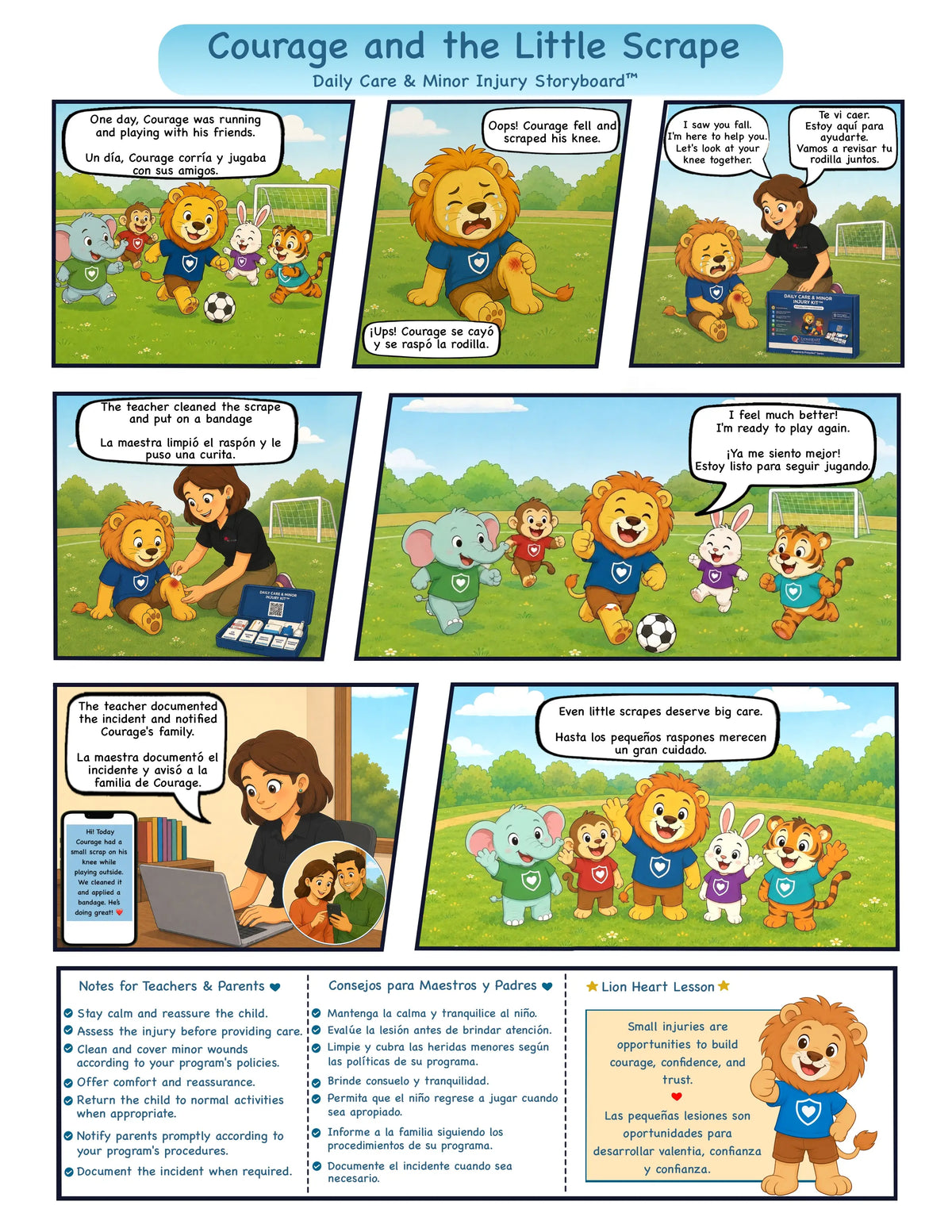
Featured Storyboard
Why Stories Work
Children don't usually remember a list of rules.
They remember characters. They remember experiences. They remember how a story made them feel.
Stories create opportunities to talk about:
- Asking for help.
- Being kind to others.
- Solving problems.
- Managing emotions.
- Making safe choices.
That's why Courage is more than a mascot. He's a trusted friend who helps children practice confidence before they need it.
What Children Learn
After reading the story, reinforce these ideas:
- Everyone has accidents sometimes.
- It's okay to ask an adult for help.
- Friends can be kind and patient.
- Being brave doesn't mean never crying.
- We can feel better with support and encouragement.
Circle Time Questions
Ask children:
- Has anyone ever fallen while playing?
- What helped you feel better?
- How can we help a friend who gets hurt?
- Who are the trusted adults at our school?
Encourage children to share their own experiences and listen respectfully to one another.

Keep the Learning Going
The lessons in Courage and the Little Scrape™ extend beyond one scraped knee. Everyday moments give providers opportunities to model calm responses, build trust, and help children develop confidence.
Look for opportunities throughout the day to:
- Acknowledge feelings without minimizing them.
- Respond calmly when a child is hurt or upset.
- Encourage children to ask for help when they need it.
- Model kindness when another child is injured.
- Help children return to play when they feel ready.
- Communicate with families about injuries and care provided.
⭐ Best Practice
Read safety stories before children experience a situation—not afterward. Children who have already explored these ideas through stories are often more confident when similar situations occur in real life.
📘 Licensing Perspective
Storytelling, social-emotional learning, and guided discussions are commonly used in early childhood education to support language development, emotional growth, and positive social interactions.
Courage Storyboards™ are intended to complement your existing curriculum and classroom practices.
Courage's Corner
"Every story is a chance to practice courage before we need it."
— Courage™
💬 Reflect & Discuss
- What everyday situations could be used to help children learn about safety, kindness, and asking for help?
- How can stories help children understand feelings and safe choices differently than simply giving them rules?
- After reading Courage and the Little Scrape™™, what words or actions could you use to help a child feel heard, reassured, and supported after a minor injury?
✅ Try It Today
Before your next group or story time:
- Read Courage and the Little Scrape™ with the children in your care.
- Ask children: "What can we do when we or one of our friends gets hurt?"
- Practice reassuring language such as, "I saw what happened. I'm here to help you."
- Notice your own response: The next time a child has a minor injury, model a calm voice, acknowledge how they feel, and help them return to play when they are ready.
Module 10 Complete
You've completed this module. Keep these reminders in mind as you use storytelling to build confidence, kindness, and everyday safety in your classroom.
- Stories help children understand safety in age-appropriate ways.
- Courage Storyboards™ reinforce kindness, resilience, and asking for help.
- Circle time discussions encourage empathy and confidence.
- Storytelling complements everyday learning and classroom routines.
Tools, Templates & Resources
Practical Resources for Everyday Success
"The best tools don't replace good judgment—they help good people work more confidently and consistently."
Why This Matters
Preparedness isn't just about having supplies.
It's about having systems.
The Lionheart Learning Center™ provides practical tools that support your daily work and help create consistent routines across your classroom and program.
Whether you're preparing for the day, restocking supplies, communicating with families, or training new staff, these resources are designed to save time, improve organization, and support quality care.
As the Learning Center grows, additional resources will continue to be added, giving you access to updated materials without replacing your guide.
Your Lionheart Resource Library
Scanning the QR code connects you to a growing library of downloadable resources.
Resources are organized into five categories:
Classroom Readiness
Resources to help prepare your classroom before children arrive.
Examples include:
- Classroom Readiness Check™
- Daily Safety Scan™
- Monthly Supply Inventory
- Restocking Log
Daily Care Resources
Quick-reference tools that support everyday classroom care.
Examples include:
- Daily Care Kit Contents Guide
- Molded Insert Reference Sheet
- Supply Reorder Checklist
- Classroom Restocking Guide
Parent Communication
Professional communication templates that can be adapted to your program's procedures.
Examples include:
- Minor Injury Conversation Guide
- Parent Email Template
- Parent Text Message Template
- Incident Communication Worksheet
These templates should always be customized to reflect the actual situation and your organization's policies.
Staff Development
Resources that help orient new employees and promote consistency among teaching teams.
Examples include:
- New Staff Orientation Checklist
- Daily Care Kit Overview
- Team Discussion Guide
- Monthly Preparedness Meeting Topics
Classroom Activities
Printable materials that reinforce kindness, confidence, and everyday safety.
Examples include:
- Courage Storyboards™
- Coloring Pages
- Circle Time Discussion Cards
- Classroom Posters
- Parent Activity Sheets
These activities extend learning beyond the Daily Care & Minor Injury Kit™ and help reinforce positive habits throughout the year.
A Living Learning Center™
Unlike a printed manual, the Lionheart Learning Center™ can continue to grow.
As new materials become available, you'll have access to:
- Additional Storyboards™.
- Updated printable forms.
- New classroom activities.
- Seasonal safety resources.
- Product updates.
- Replacement item information.
- Additional Prepared & Protected™ guides.
⭐ Best Practice
Create a Preparedness Binder or digital folder where your team stores frequently used Lionheart resources alongside your program's own forms and procedures.
Keeping everything in one place makes it easier for all staff to access the information they need.
📘 Licensing Perspective
Many child care programs use internal checklists, orientation materials, and classroom resources to promote consistency and quality.
The Lionheart templates are intended to support your existing systems and should be used in conjunction with your organization's policies and applicable licensing requirements.
Courage's Corner
"Being prepared doesn't mean remembering everything. It means building systems that help everyone succeed."
— Courage™
💬 Reflect & Discuss
- Which downloadable resource would be most helpful in your classroom today?
- How do your current systems support consistency among staff?
- If you could create one additional Lionheart resource, what would it be?
✅ Try It Today
Before your next shift:
- Scan the QR code and explore the Lionheart Learning Center™.
- Download one resource you can begin using this week.
- Share the Learning Center with another member of your teaching team.
Module 11 Complete
You've completed this module. Keep these reminders in mind as you use Lionheart resources to strengthen organization, consistency, and preparedness throughout your classroom.
- Practical tools help create consistent classroom routines.
- The Lionheart Learning Center™ extends the value of your Daily Care & Minor Injury Kit™.
- Downloadable resources support organization, communication, and preparedness.
- The Learning Center will continue to grow with new materials over time.
- Strong systems help teachers spend more time caring for children and less time searching for information.
The Everyday Difference You Make
Preparedness Is a Reflection of Caring
"The smallest acts of preparation often become the greatest acts of care."
Why This Matters
Throughout this guide, you've explored more than a collection of supplies.
You've explored a way of thinking.
Preparedness is not simply about having Bandages, gloves, or cold packs.
It's about creating an environment where children feel safe, families feel confident, and educators feel prepared to respond with calm and compassion.
Every organized shelf... Every reassuring conversation... Every thoughtful safety check... Every act of kindness... Together, they create a classroom where children can learn, explore, and grow with confidence. That is the Lionheart philosophy.
The Everyday Difference
Preparedness Is a Daily Choice
Children rarely notice the work that happens before they arrive.
They don't see you restocking supplies. They don't see you checking the playground. They don't see you reviewing classroom routines with your team.
What they do experience is the result of those efforts.
They experience classrooms that feel calm. Teachers who are confident. Adults who know what to do.
Preparedness isn't something children see. It's something they feel.
The Everyday Difference
The work of early childhood professionals is built on thousands of small moments.
- Helping a child after a fall.
- Offering a reassuring smile.
- Listening carefully.
- Communicating honestly with families.
- Encouraging children to try again.
These moments may seem ordinary, but together they shape children's confidence, resilience, and sense of security.
The Daily Care & Minor Injury Kit™ supports those moments—but it is your professionalism, compassion, and dedication that make the greatest difference.
Continue Growing
Learning doesn't end when you finish this guide.
As your classroom changes, your knowledge and skills will continue to grow as well.
We encourage you to:
- Continue learning through trusted resources.
- Share ideas with coworkers.
- Review your classroom routines regularly.
- Explore new materials in the Lionheart Learning Center™.
- Celebrate the progress you and your team make throughout the year.
Preparedness is a lifelong habit of learning and improving.
The Lionheart Promise™
At Lionheart Safety, we believe that child care professionals deserve more than products.
You deserve practical tools. Reliable resources. Thoughtful guidance. And encouragement from people who understand the importance of your work.
Our commitment is to continue developing educational resources that support you in creating safe, welcoming, and prepared environments for every child in your care.
Keep Growing
Completing this guide is not the end of your learning journey—it's the beginning of building even stronger habits of preparedness, organization, and compassionate care.
Every day brings new opportunities to make a positive difference in the lives of children and families.
- Continue learning through the Lionheart Learning Center™.
- Share ideas and best practices with your coworkers.
- Review classroom routines regularly.
- Celebrate small improvements throughout the year.
- Keep preparedness at the heart of everything you do.
⭐ Best Practice
Take a few minutes each month to reflect on one thing your classroom is doing well and one area you'd like to improve.
Small improvements, made consistently, create lasting change.
📘 Licensing Perspective
Continuous learning, organized systems, and reflective practice are characteristics of high-quality early childhood programs.
This guide is intended to support your ongoing professional growth and complement your organization's existing policies, training, and quality improvement efforts.
Courage's Corner
"Courage isn't about doing one extraordinary thing. It's about choosing kindness, preparation, and compassion every single day."
— Courage™
💬 Reflect & Discuss
- Which idea from this guide will have the greatest impact on your classroom?
- What is one preparedness habit you want to strengthen over the next month?
- How can your team continue supporting one another in creating a safe, caring environment for children?
✅ Try It Today
As you begin your next workday:
- Thank a coworker for something they do that helps children feel safe.
- Choose one small improvement to make in your classroom this week.
- Bookmark the Lionheart Learning Center™ and return whenever you need new ideas or resources.
Congratulations!
Congratulations on completing the Lionheart Learning Center™ guide. Keep these final reminders with you as you continue creating safe, organized, and caring learning environments every day.
- Preparedness begins long before an injury occurs.
- Calm, compassionate responses help children feel safe.
- Organization and teamwork support quality care.
- Small daily habits create lasting improvements.
- Every child deserves caring adults who are prepared, confident, and kind.
Printable Resources
Download helpful checklists, forms, and reference guides to support your daily care routines and emergency preparedness.



Storyboard
Real-world scenarios designed to reinforce learning through practical examples.
Frequently Asked Questions
Use the kit to respond to common everyday injuries such as minor cuts, scrapes, bumps, nosebleeds, and similar non-emergency situations. Always follow your organization's policies and procedures.
No. The Learning Center is designed to support your existing knowledge and provide practical guidance. It does not replace required First Aid, CPR certification, licensing requirements, or professional medical judgment.
It's recommended to inspect the kit regularly and replace any used or expired items so it is always ready when needed.
Store the kit in a consistent, easily accessible location known to all staff members. Keeping the kit in the same place helps ensure a quick response during everyday incidents.
Follow your program's policies and licensing requirements. Minor injuries may only require documentation and parent notification, while serious injuries or medical emergencies should be handled according to your emergency procedures, including calling emergency services when appropriate.
Refill Oders




Preparedness Starts with Courage
Join us in developing courageous responders in your workplace, classroom, or community.
Together, we help people gain the confidence, practical skills, and readiness to take action when every second counts